
Michael Oliver Referee Profile: Positioning as a Superpower
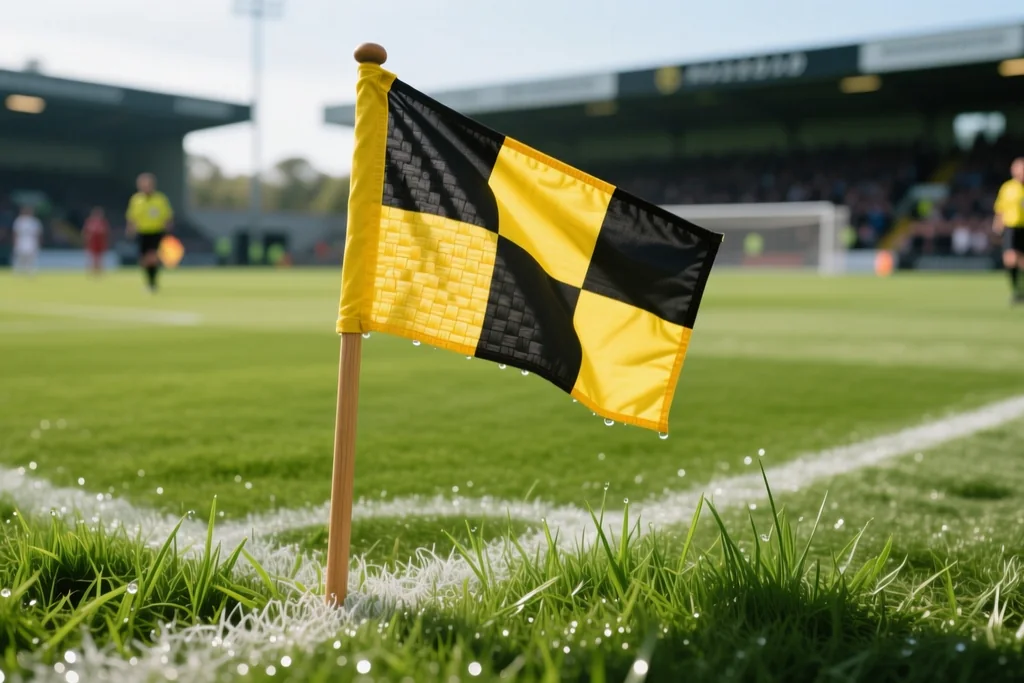
The Michael Oliver referee profile is judged mostly by movement, which is a strange way to assess a job that looks like it is about decisions. The best officials are rarely noticed, and the reason they are rarely noticed is referee positioning: close enough to see contact, far enough away not to block the camera angle. Oliver built a Premier League and international career on angles, fitness and calm.
Michael Oliver is the clearest example of that craft in the modern English game. A referee from Ashington in Northumberland, he came through the county football system and was promoted to the Select Group at 25, the youngest official to reach that level, and has refereed primarily in the Premier League ever since, alongside appointments in European and international competition.
Michael Oliver referee: why positioning decides more than the whistle
A referee who is ten metres away from an incident is making an informed decision. A referee who is thirty metres away is making an educated guess, and everyone in the stadium can see the difference. Positioning is the discipline that turns a difficult job into a manageable one, and it is trained as relentlessly as any physical skill in the game.
The difficulty is that the correct position keeps moving. Play is compact in one moment and stretched across eighty metres the next, and the referee has to read the direction of a pass, the speed of the runners and the likely point of contact simultaneously. Getting it right requires anticipation, which is why fitness and reading of the game are inseparable at the top level.
- Diagonal system: referees work a diagonal across the pitch to stay close to play without obstructing it.
- Angle over distance: a position that sees both the ball and the challenge beats a position that is merely nearby.
- Anticipation: moving before the pass is played rather than after it lands.
- Recovery runs: sprinting behind a counter-attack to stay within decision range.
- Camera awareness: avoiding positions that hide the incident from the broadcast angles the video team will use.
Referee positioning in football: the fitness that makes it possible
A Premier League referee covers a distance comparable to a midfielder over ninety minutes, with repeated accelerations and changes of direction. Officials are tested continuously rather than once a season, and the tests are standardised internationally so that a referee can be compared with colleagues across Europe.
Communication as a second skill
Positioning buys information; communication buys control. Officials at the top level talk constantly, using short phrases to warn players before a flashpoint rather than after it. A quiet word after a first foul often prevents the second one, and the sanction that would have followed it.
The vocabulary is deliberate. Referees avoid anything that sounds like a threat, keep explanations brief, and use the captain as the channel for anything that needs to be repeated. That structure is written into the laws, and it exists because a long argument in the middle of a pitch is worse for everyone than a two-second exchange.
| Situation | Good position | What it decides |
|---|---|---|
| Penalty area challenge | Wide angle, five to ten metres away | Whether contact came before the ball |
| Counter-attack | Behind play, central channel | Whether a foul stopped a promising attack |
| Set piece | Outside the wall, sightline to the box | Holding and pushing before the ball arrives |
| Offside-adjacent play | Level with the second-last defender | Whether to accept the assistant's flag |
| Mass confrontation | Slightly back, facing the group | Who initiated, who escalated |
What the modern official carries
Alongside the whistle, a referee arrives with a set of technical aids: a watch that receives the goal-line signal, a second watch for timekeeping, cards, a notebook or electronic recording device, and a headset linking them to the assistants and the video team. None of those tools make a decision. They confirm one, and they only help an official who is already in a position to see what happened.
The video era has added a further consideration. A referee who was in a good position often survives a review, because the footage usually confirms what they saw rather than contradicting it. A referee who was unsighted is more likely to be called to the monitor, which makes positioning a defence as well as a technique.
Why the low-profile style works
Consistency is the most valued quality in refereeing, and consistency is easier to maintain when decisions are gathered from good positions. Officials who see incidents clearly tend to be more stable in their judgements across a match, which reduces the swings in tolerance that players notice and exploit.
That is the quiet argument for the modern English school of refereeing: fewer spectacular interventions, fewer long arguments, and a match that keeps its shape. It is not a style that produces headlines, and it is precisely why officials like Oliver are given the matches that matter most.
The powers those officials work with are set out in Law 5, and the way appointments are decided is covered in Premier League referee appointments explained. For the pathway that produces a referee capable of working at that level, see how referees get promoted.
Positioning is invisible when it works. That is the whole point: a referee who is never in the way, never behind the play and never guessing is a referee nobody needs to talk about.
Read next
Premier League Referee Appointments Explained
A referee is appointed to a match like a player is picked for a squad: form, fitness, geography and workload all count.
2026-09-26
Anthony Taylor Referee Profile: Game Management and the Craft
Managing a match is mostly talking: early words, clear signals and a whistle that arrives at the right moment.
2026-09-02
Craig Pawson Referee Style: The Quiet Art of Control
The best controlled matches are the ones nobody talks about afterwards. That is not luck, it is method.
2026-08-22