
The VAR Protocol, Step by Step: Check, Review, Call
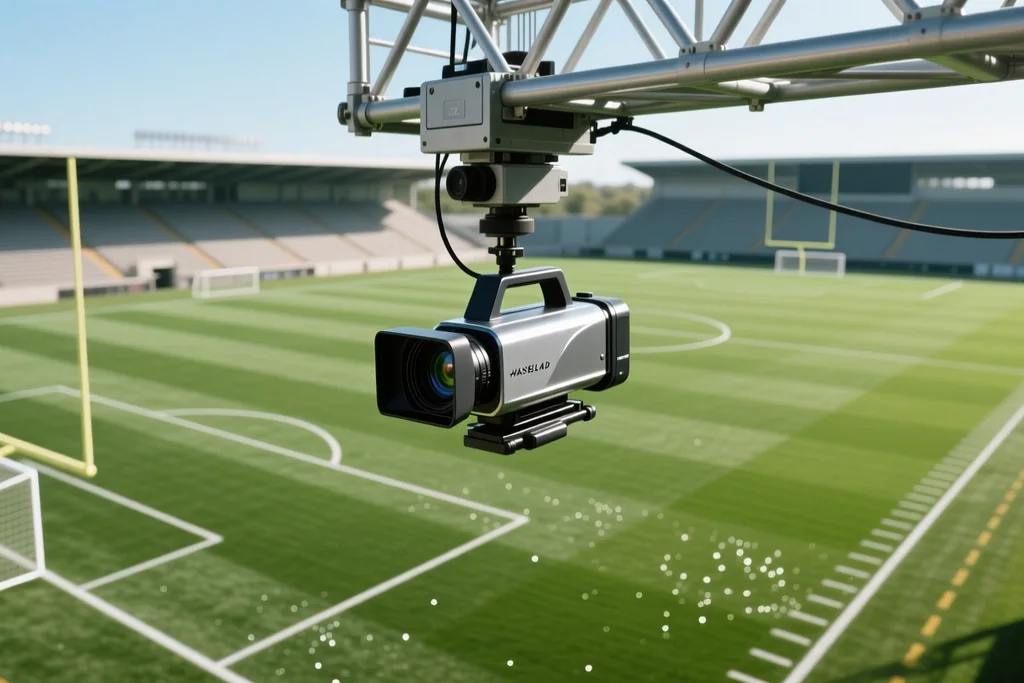
The VAR protocol runs through the same sequence every time, and it usually starts before anyone in the stadium realises a decision is being examined. The order is deliberately unglamorous: check, review if needed, communicate the outcome, restart the match. Understanding that order explains why some incidents produce a three-minute delay and others pass without a word.
The process begins with a silent check. Whenever a goal is scored, a penalty is awarded or a red card is shown, the video team automatically examines the footage while play continues or while the restart is being prepared. Most checks end without anything visible happening, and nobody watching would know one took place.
How does VAR work: the stages of a check
The stages are fixed, and each one has a defined trigger. A check becomes a review only when the video team believes the threshold has been met, and a review becomes a pitchside review only when the incident involves judgement rather than fact.
- Check. The video assistant referee examines the incident against the four reviewable categories.
- Advice. If the footage suggests a clear error, the VAR informs the referee by headset.
- Review. The referee either accepts the factual evidence or goes to the pitchside monitor.
- Decision. The referee makes the final call, then signals it and explains it where the competition allows.
- Restart. Play resumes with the correct restart for the corrected decision, not the original one.
Who is speaking, and to whom
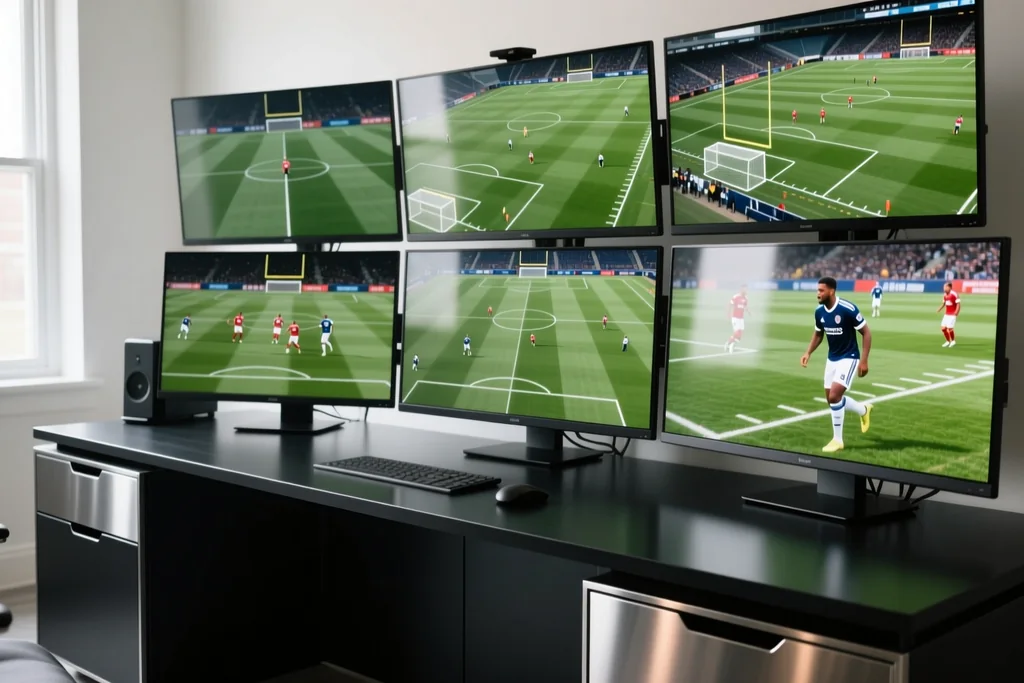
The referee and the VAR talk on a closed channel that nobody else hears at the time. The video assistant referee leads the conversation, supported by an assistant VAR who watches a different camera feed and can flag something the lead official missed. A replay operator cuts the angles the referee will see, which is why the monitor trip usually shows two or three specific views rather than a highlight reel.

What happens during a pitchside review
When the referee goes to the monitor, the on-field decision is still live. That is important: the referee is not looking for reasons to change it, they are looking for evidence that it was wrong. The footage is slowed, frozen and repeated, and the referee communicates the outcome either by changing the original signal or by confirming it.
The other officials keep control of the match while the referee is at the screen. Substitutes stay in the technical area, the fourth official manages the benches, and the clock keeps running. Added time at the end of the half accounts for the stoppage, which is why a long review in the first half rarely leaves the crowd short-changed.
| Role | Responsibility | Talks to |
|---|---|---|
| Referee | Final decision, monitor review, signalling | VAR, assistants, players |
| Video assistant referee | Checks categories, recommends review | Referee only |
| Assistant VAR | Second opinion on a different camera feed | VAR |
| Replay operator | Cuts and sequences the angles | VAR |
| Fourth official | Benches, substitutions, information relay | Referee, teams |
Why the process can still go wrong
A protocol cannot remove human error, and the most famous failures have involved communication rather than technology. A misheard instruction, a decision made before the check finished, or an assumption about what the referee meant can all produce an outcome that satisfies the procedure and still ends up wrong. That is why reviews are logged, recorded and reviewed again after the match.
Competitions have also started releasing audio from selected reviews, which has done more to explain the process to supporters than any rule change. Hearing a referee and a video assistant working through an incident in real time removes much of the suspicion surrounding the system.
The VAR protocol FIFA uses: the technology behind the conversation
Three separate systems feed the officials during a match, and they are often confused with each other. Goal-line technology is fully automatic: a watch or earpiece signal tells the referee the whole ball crossed the line, and the decision is made without a review. Semi-automated offside technology builds a tracking picture and alerts the video team when a player may be offside, but a human still confirms the outcome.
The third system is the television feed itself, plus the extra cameras a competition installs for offside and goal-line coverage. The video team sees every angle available, and the replay operator chooses which ones to send to the pitchside monitor. That selection is part of the process, and it is why a review can look different in the ground than it does on television.
Assistants are briefed to delay a tight offside flag until the attack ends, so that a goal can be checked rather than cancelled by a premature whistle. That is why a ball sometimes runs on after an obvious offside: the flag is late by design, not by error.
What the protocol is really for
Its purpose is to make review predictable: same trigger, same sequence, same outcome. That predictability is what allows referees to keep making decisions on the pitch rather than deferring every one of them. Our guide to the four reviewable categories explains what can be examined, and the clear and obvious error test explains the standard applied at each stage.
Inside the room, the working environment is covered in who sits where in the VAR hub. Once you know the sequence, a three-minute delay stops looking like indecision and starts looking like a process being followed.
Read next
VAR Rules Explained: What Can and Cannot Be Reviewed
VAR is not a second referee and it never re-referees a match. Four categories of decision are reviewable, and the list is shorter than most fans assume.
2026-09-25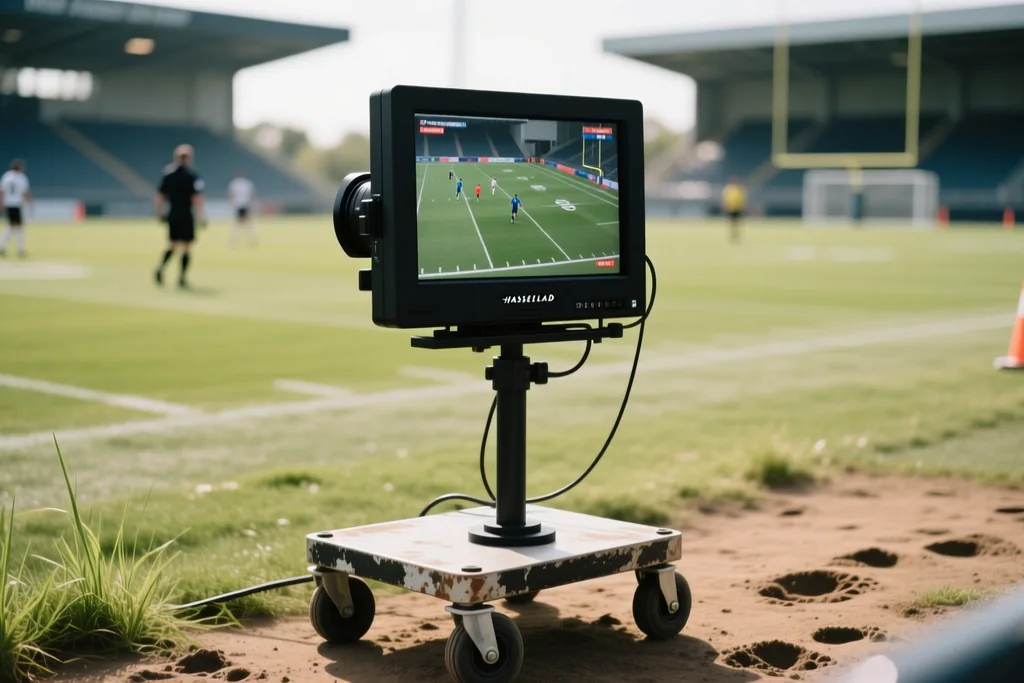
The Clear and Obvious Error Test: Why VAR Stays Silent
Two words in the protocol do most of the work: clear and obvious. They are also the reason a decision you hate can survive a video review.
2026-09-14
Semi-Automated Offside Technology, Explained Simply
Semi-automated offside does not replace the referee. It hands the VAR an offside line far faster than a manual drawing, and the decision stays human.
2026-08-26