
Law 2: The Ball, and What Makes It Legal
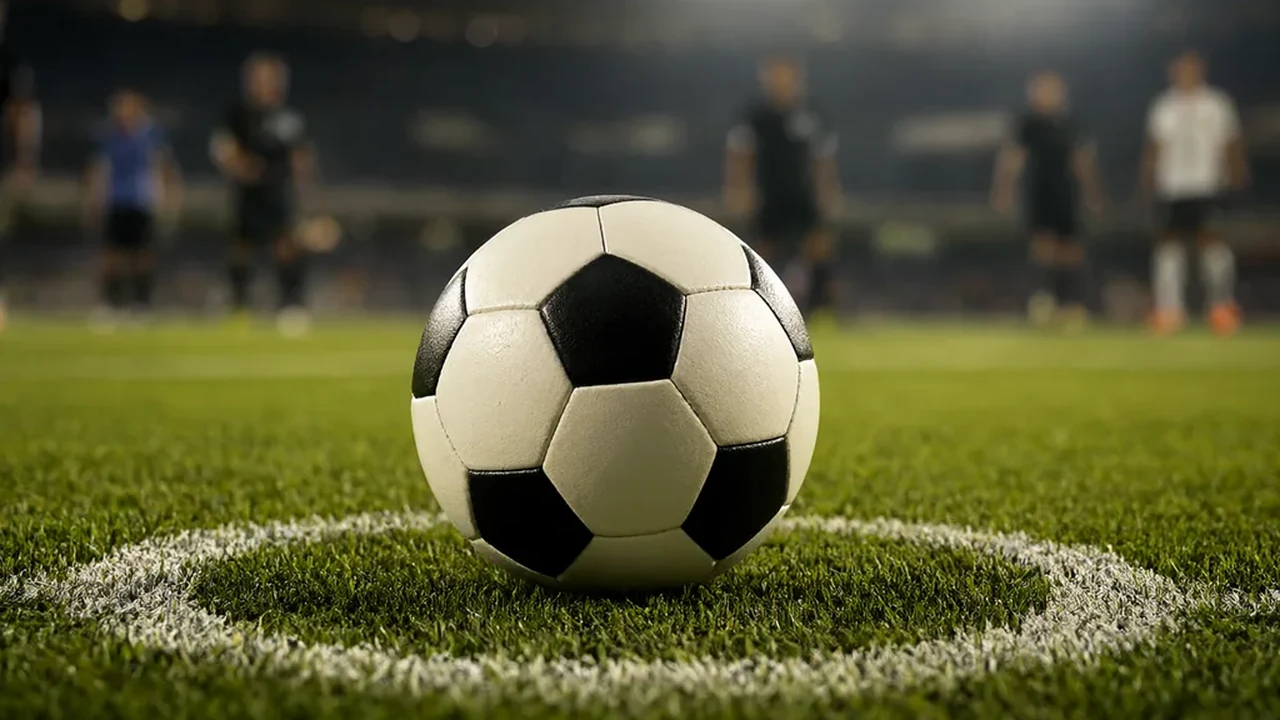
Law 2 is short enough to read in a minute, and yet it decides more of a match than most supporters realise. The ball has to be a specific size, a specific weight and inflated to a specific pressure before anyone kicks it. Get those wrong and the law has an answer ready.
Referees do not weigh footballs in the tunnel, but they do check them, and the specification matters most at the levels where equipment is supplied by the home club rather than by a competition.
The four measurements that define a match ball
All balls used in a match must be spherical, made of suitable material, and fall inside three fixed ranges. Those ranges are deliberately generous, because a ball loses pressure and gains a little weight in wet conditions over ninety minutes.
| Property | Requirement | Practical note |
|---|---|---|
| Shape | Spherical | No oval or irregular training balls |
| Circumference | 68-70 cm | Measured around the widest point |
| Weight | 410-450 g | At the start of the match |
| Pressure | 0.6-1.1 atmosphere | At sea level, equal to 600-1,100 g/cm2 |
| Approval | FIFA Quality Programme mark | Required in FIFA and confederation competitions |
The pressure range is the figure that surprises people, because 0.6 to 1.1 atmosphere is a wide band. A ball at the bottom of the range feels soft and slow; one at the top feels hard and quick. Both are legal, and a referee has no business asking for a different ball simply because the players dislike the feel of it.
What Law 2 leaves open
The law fixes size, weight, pressure and shape, and then stops. It does not prescribe colour, panel design, surface texture or stitching pattern, which is why manufacturers can sell very different balls that are all legal. A white ball, a yellow ball and a ball covered in graphics are equally acceptable if they meet the measurements.
What the law does insist on is suitable material and, in top competitions, certification. A ball that behaves unpredictably because a panel is lifting is not suitable, even if it still passes a circumference check. If the referee judges the ball defective, play is stopped and the ball is replaced, and the law does not require it to burst before that happens.
Marks, logos and what may appear on the ball
In competitions organised by FIFA, a confederation or a national association, the ball must meet the requirements of the FIFA Quality Programme and carry one of its marks. National association competitions may also require a marked ball. The mark is not decoration: it confirms that the ball has been tested beyond the minimum specification in Law 2.
Commercial advertising on the ball is not permitted in those competitions, with three exceptions: the competition logo or emblem, the competition organiser, and the authorised manufacturer's trademark. Competition regulations may limit the size and number of those markings, which is why a match ball looks restrained compared with a replica sold in a club shop.
When the ball becomes defective
If the ball becomes defective, play is stopped and restarted with a dropped ball. That is the general rule, and it applies whether the ball bursts, loses shape or simply will not hold air. The referee is the only person who may change the ball during the match, and no one else may do it without permission.
At a restart the answer is different. If the ball becomes defective at a kick-off, goal kick, corner kick, free kick, penalty kick or throw-in, the restart is taken again. The logic is simple: the restart never properly happened, so it is repeated rather than replaced.
The penalty kick and the shoot-out
A penalty is a special case. If the ball becomes defective while a penalty kick or a shoot-out kick is moving forward, and before it touches a player, the crossbar or a goalpost, the kick is retaken. Once the ball has hit something, the kick has effectively been completed and the outcome stands.
This distinction produces one of the more awkward moments in the laws: a keeper saves a burst ball, and the referee has to decide whether the defect appeared before or after contact. The law gives a clear answer, and the answer depends on that single touch.
Additional balls and the referee's control
Additional balls that meet the requirements of Law 2 may be placed around the field of play. Their use is under the referee's control, which in practice means the fourth official and the ball assistants manage them, and the referee decides when a second ball on the pitch has become a problem.
The practical value of that rule is tempo. A ball that has gone into the stand should not require a two-minute search, and a spare behind the goal lets play restart quickly. The limit is the referee's judgement: if a second ball rolls onto the field and interferes with play, the game is stopped and restarted with a dropped ball.
- Spare balls must meet the same specification as the match ball.
- Permission is required before any ball is changed during play.
- A defective ball at a restart means the restart is retaken, not replaced.
- A burst ball during play means a dropped ball where play stopped.
- A second ball on the field is an outside interference and is dealt with by the referee.
None of this is glamorous, and that is the point. Law 2 exists so that a match is played with equipment both teams can trust, and so that a flat ball in the eighty-eighth minute does not become an argument about the result. For the restart that follows, see the full list of the 17 Laws, and for who controls the ball during play, the referee powers and duties.
Read next
Law 1: The Field of Play, Measured
Every match starts with a rectangle. Law 1 sets its dimensions, its lines and the marks that decide penalties and goal kicks.
2026-10-18
Law 3: How Many Players and How Many Subs
Eleven to start, seven to continue, five substitutions from three opportunities: the numbers and procedures in Law 3.
2026-10-18
Law 4: Players' Equipment and What Is Banned
Five compulsory items, a total ban on jewellery and strict rules on colours: what Law 4 allows a player to wear.
2026-10-18