
Law 3: How Many Players and How Many Subs
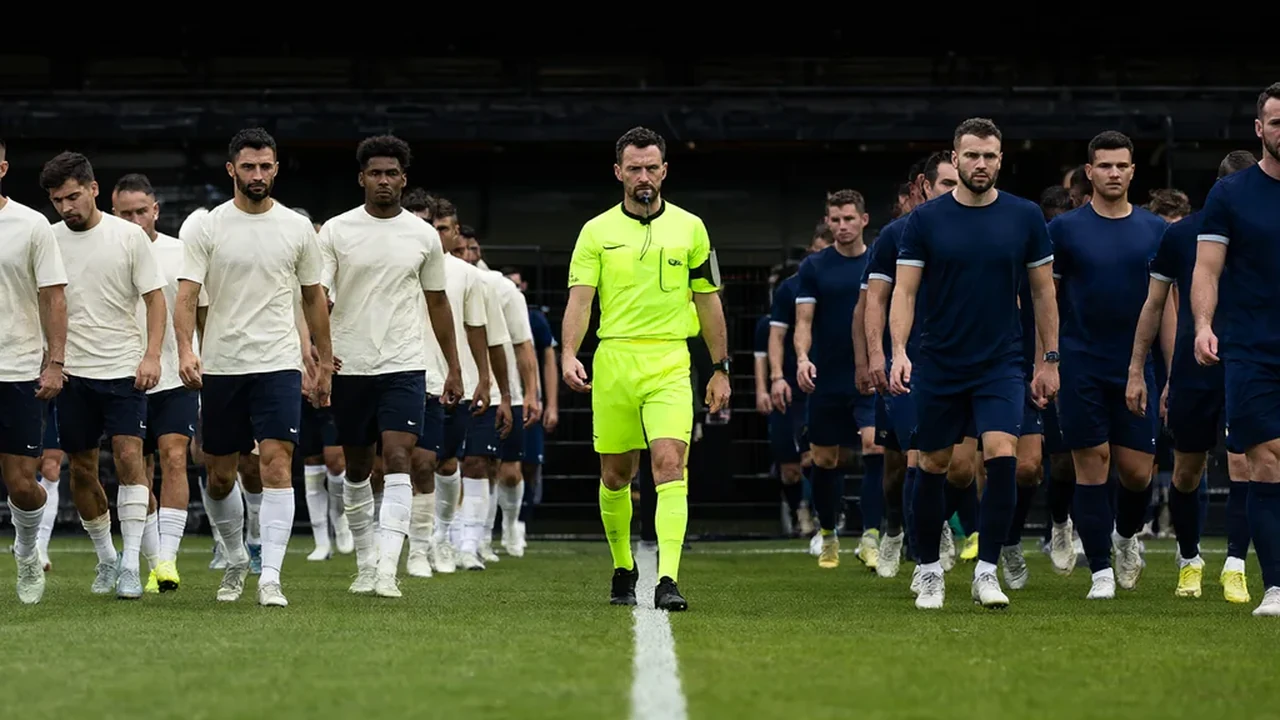
Law 3 answers a question that sounds trivial until it decides a result: how many players are allowed, and what happens when the number is wrong. Eleven is the headline, seven is the survival line, and five is the modern limit on changes. Around those three numbers sits a set of procedures that referees apply every weekend.
The law also deals with the cases nobody plans for: a substitute who enters without permission, a player who swaps with the goalkeeper, and a goal scored while an extra person is on the field.
Eleven players and the minimum of seven
A match is played by two teams, each with a maximum of eleven players, one of whom must be the goalkeeper. A match may not start or continue if either team has fewer than seven players. That minimum is not affected by temporary dismissals or by the one-minute periods off the field used in the time-limited substitution and off-field treatment protocols.
If a team is responsible for a match not continuing because it has fewer than seven players, the match is in principle forfeited by that team, subject to the competition regulations. If players deliberately leave the field to force a stoppage, the referee is not obliged to stop play and may apply advantage, but the match cannot resume once the ball goes out of play.
Substitutions: five players, three opportunities
In official competitions the number of substitutes a team may use is set by FIFA, the confederation or the national association, up to a maximum of five. Where five are permitted, each team has a maximum of three substitution opportunities, and may additionally make substitutions at half-time.
| Item | Rule |
|---|---|
| Players on the field | Maximum 11, one must be the goalkeeper |
| Minimum to start or continue | 7 players |
| Substitutes used | Up to 5 in official competitions |
| Substitution opportunities | 3, plus half-time |
| Substitutes named | From 3 to a maximum of 15 |
| Extra time | One additional substitute and one additional opportunity if competition rules allow |
| Return substitutions | Only youth, veterans, disability and grassroots football |
Two details catch people out. When both teams make a substitution at the same time, that counts as a used opportunity for both. And multiple substitutions by one team during the same stoppage count as a single opportunity, which is why coaches often make a double change rather than two separate ones.
A named substitute who starts the match in place of a named player, without the referee being told, is allowed to continue. No disciplinary action follows, the named player becomes a substitute, the number of substitutions is not reduced, and the referee simply reports the matter afterwards. The laws are more forgiving of administrative confusion than of tactical cheating.
How a substitution is completed
The names of the substitutes must be given to the referee before the start of the match. A substitute not named by then may not take part. To replace a player, the referee must be informed, the player leaving must have permission and must leave by the nearest point on the boundary line unless the referee allows another route.
Under the current protocol the player being replaced must be off the field within ten seconds of the substitution board being shown. If that deadline is missed, the player still has to leave, and the substitute may only enter with the referee's permission at the first stoppage after one minute has elapsed following the restart.
The substitution is completed when the substitute enters the field of play. From that moment the replaced player becomes a substituted player, the substitute becomes a player, and the substitute can take any restart, including a penalty kick.
Goalkeepers, captains and returning players
Any player may change places with the goalkeeper, provided the referee is informed and the change happens during a stoppage. If the change is made without permission, the referee allows play to continue and cautions both players when the ball next goes out of play, unless the swap happened at half-time or in the period before extra time or a shoot-out.
Each team must have a captain on the field wearing an identifying armband. The captain has no special privileges under the laws, only a degree of responsibility for the behaviour of the team, although competitions may adopt the guidance that only the captain approaches the referee on certain decisions.
Extra persons on the field
If a team official, substitute, substituted or sent-off player, or an outside agent enters the field, the referee stops play only if there is interference, has the person removed and takes the appropriate disciplinary action. The restart reveals who caused the problem: a direct free kick or penalty kick for a team official, substitute or sent-off player, and a dropped ball for an outside agent.
- Team official, substitute or sent-off player: direct free kick or penalty kick from the position of the interference.
- Outside agent: dropped ball where play was stopped, or where contact was made.
- No interference: play continues and the person is removed at the next stoppage.
- Goal-bound ball: the goal stands if the interference did not prevent a defender from playing the ball, unless it came from the attacking team.
If the ball is going into the goal and the interference does not prevent a defender from playing it, the goal is awarded even if the ball was touched, unless the interference came from the attacking team. That clause has saved more than one referee from a very long conversation. For the sanctions that follow, see Law 12 and the card system, and for the officials who apply them, the referee powers and duties.
Read next

Law 1: The Field of Play, Measured
Every match starts with a rectangle. Law 1 sets its dimensions, its lines and the marks that decide penalties and goal kicks.
2026-10-18
Law 2: The Ball, and What Makes It Legal
Circumference, weight, pressure and the dropped ball after a burst: Law 2 in the numbers the officials actually use.
2026-10-18
Law 4: Players' Equipment and What Is Banned
Five compulsory items, a total ban on jewellery and strict rules on colours: what Law 4 allows a player to wear.
2026-10-18