
Law 6 Other Match Officials: Assistants, Fourth Official and VAR
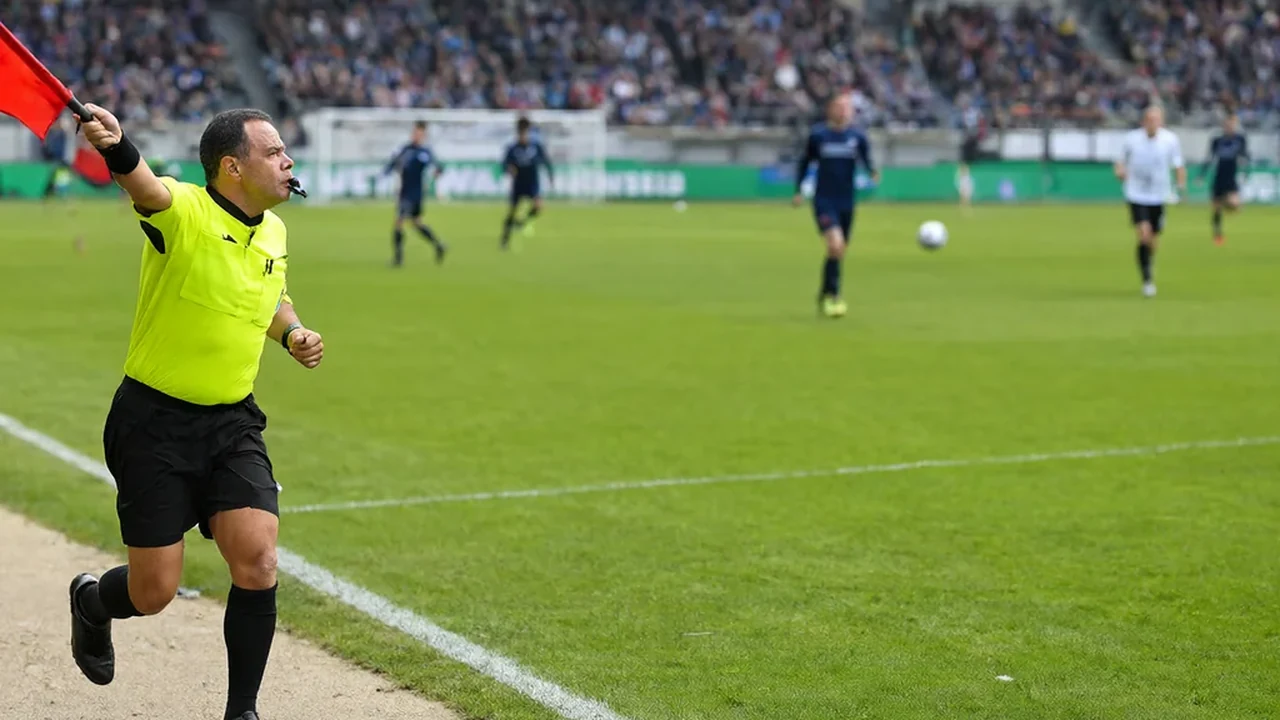
Law 6 is the shortest law most referees never read twice, and yet it decides who is allowed to make the call that changes a match. It names the other match officials who may be appointed, sets out what each of them can indicate, and keeps one principle intact: the referee takes the final decision. Everything else in the law is an instruction about how help arrives and how far that help can go.
The list is longer than most crowds realise. A match may carry two assistant referees, a fourth official, two additional assistant referees, a reserve assistant referee, a video assistant referee and at least one assistant video assistant referee. Not every competition uses all of them, and the appointments are a competition decision rather than a law requirement, but the powers attached to each role are fixed in the lawbook.
The two groups of match officials
The law splits the group deliberately. The referee, the assistant referees, the fourth official, the additional assistant referees and the reserve assistant referee are the on-field match officials. The VAR and the AVAR are the video match officials, and they work within the Laws and the VAR protocol rather than inside the technical area. That division explains why a video official can overturn a factual error but cannot manage a substitution or a technical area warning.
All of them operate under the direction of the referee. If an official interferes unduly or behaves improperly, the referee can relieve them of their duties and must report the matter to the appropriate authorities. The authority runs one way, from the middle of the pitch outwards.
What an assistant referee actually signals
An assistant referee is not a second referee with a flag. The law lists the moments where the assistant is expected to indicate a decision, and the list is short on purpose. They signal when the whole of the ball leaves the field of play and which team is entitled to the corner kick, goal kick or throw-in, when a player in an offside position may be penalised, and when a substitution is requested. They also monitor the substitution procedure itself.
- Ball out of play: the assistant indicates that the whole ball has left the field and which restart follows.
- Offside: the assistant indicates that a player in an offside position may be penalised, and the referee decides whether to act.
- Substitutions: the assistant flags the request and then monitors the procedure at the touchline.
- Penalty kicks: the assistant watches whether the goalkeeper moves off the goal line before the ball is kicked and whether the ball crosses the line.
- Distance: the assistant may enter the field of play to help control the 9.15 m distance at a free kick.
That last duty is one of the few times an assistant is allowed inside the field during play, and it exists because ten yards is hard to sell from twenty metres away. If additional assistant referees have been appointed, the assistant referee at a penalty kick takes a position in line with the penalty mark instead.
The fourth official's real job
The fourth official is usually shown on television holding a board, which undersells the role. The law gives the fourth official a set of administrative duties: supervising the substitution procedure, checking a player's or substitute's equipment, managing the re-entry of a player after a signal from the referee, supervising the replacement balls, and indicating the minimum amount of additional time the referee intends to play at the end of each half, extra time included. The fourth official also informs the referee about irresponsible behaviour by anyone in the technical area.
VAR, AVAR and the reviewable incidents
A VAR may assist the referee using replay footage only for a clear and obvious error or a serious missed incident in four categories: goal or no goal, penalty or no penalty, a red card, and mistaken identity when the referee cautions or sends off the wrong player. The 2026/27 edition widened the red card category, so a red card produced by a clearly incorrect second caution is now reviewable, and mistaken identity covers the case where the card was correct in kind but the offence belonged to another player of either team. Competitions also have the option of reviewing a corner kick that was clearly awarded to the wrong team, provided the decision can be corrected immediately without delaying the restart.
| Role | Where they work | What they can indicate | Limit |
|---|---|---|---|
| Assistant referee | Touchline, in line with the second-last opponent | Ball out of play and the restart, offside, substitution requests, goalkeeper movement at penalties | Indicates only, the referee decides |
| Fourth official | Technical area, between the benches | Substitution procedure, equipment, additional time, technical area behaviour | No match decisions of their own |
| Additional assistant referee | Goal line, in line with the penalty area | Ball over the goal line, goal or no goal, corner or goal kick, goalkeeper movement at penalties | Appointed only in some competitions |
| Reserve assistant referee | Bench, ready to step in | Assists like any on-field official once in position | Replaces an official who cannot continue |
| Video assistant referee | Video operation room | Clear and obvious error or serious missed incident in the four reviewable categories | Cannot restart play or manage the game |
| Assistant VAR | Video operation room | Watches live footage, logs incidents, manages communication and time lost | Does not make the review decision |
Who takes over when an official cannot continue
The law does not answer that question itself. Competition rules must state clearly who replaces a match official who is unable to start or continue, and the rules must say whether the fourth official, the senior assistant referee or the senior additional assistant referee takes over if the referee is the one who cannot continue. A reserve assistant referee may replace an assistant referee, a fourth official or an additional assistant referee. In practice this is the part of Law 6 that leagues get wrong, because a competition that has never named a replacement order is left negotiating one at the worst possible moment.
The pattern across the whole law is worth remembering. Every other official exists to give the referee a better view of something specific, and none of them can take the decision away. That structure is why the powers and duties of the referee sit in a separate law, and why a flag, a board or a headset never outranks the whistle. The full set of seventeen laws is mapped in the lawbook explained, and the practical side of appointments and promotion is covered in our refereeing section.
Read next

Law 1: The Field of Play, Measured
Every match starts with a rectangle. Law 1 sets its dimensions, its lines and the marks that decide penalties and goal kicks.
2026-10-18
Law 2: The Ball, and What Makes It Legal
Circumference, weight, pressure and the dropped ball after a burst: Law 2 in the numbers the officials actually use.
2026-10-18
Law 3: How Many Players and How Many Subs
Eleven to start, seven to continue, five substitutions from three opportunities: the numbers and procedures in Law 3.
2026-10-18