
Law 9: When the Ball Is In and Out of Play
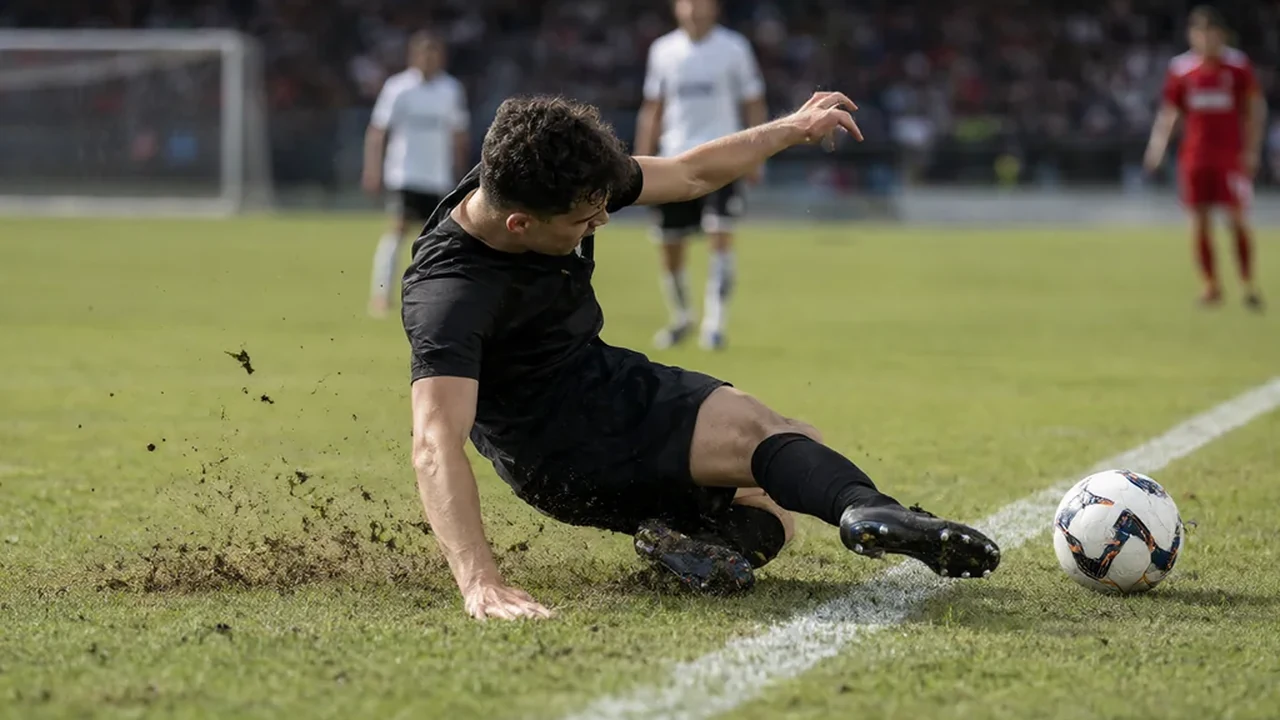
Law 9 is one principle followed by a list of exceptions, and it answers the question that starts every argument on the touchline: is the ball still in play? The short answer is that the ball is out only in three situations, and the rest of the time it is live whether it looks live or not.
The law matters because every restart depends on it. A free kick cannot be awarded for an offence committed while the ball is out of play, and a goal cannot be scored once the referee has stopped the game.
The three ways the ball goes out of play
The ball is out of play when it has wholly passed over the goal line or the touchline, on the ground or in the air. It is out when play has been stopped by the referee. And it is out when it touches a match official, remains on the field of play, and one of three things then happens: a team starts a promising attack, the ball goes directly into the goal, or the team in possession changes.
In all three cases the restart is a dropped ball. That is the law's way of saying the ball was still in play when it hit the official, but the contact changed the game enough to justify a neutral restart.
The whole ball and the whole line
The ball must wholly pass over the line. A ball touching the line, or with any part of it overhanging the line, is still in play. The line belongs to the area it bounds, so the goal line is part of the field and the touchline is part of the field as well.
Judging that is harder than it sounds, because the ball is round and the line has width: the ball is out only when there is clear space between ball and line. On the goal line the question is whether a goal has been scored, on the touchline it is which team throws the ball in, and in both cases the assistant referee looks along the line rather than at the players.
| Situation | Status | Restart |
|---|---|---|
| Ball wholly over the touchline | Out of play | Throw-in to the opponents |
| Ball wholly over the goal line, no goal | Out of play | Goal kick or corner kick |
| Ball on the line | In play | Play continues |
| Ball rebounds off a post or crossbar | In play | Play continues |
| Ball hits the referee and stays on the field | In play unless a consequence follows | Play continues or dropped ball |
| Ball hits the referee and goes into the goal | Out of play | Dropped ball to the defending goalkeeper |
| Play stopped by the referee | Out of play | Restart according to the reason |
When the ball touches the referee
Until 2019 a ball that touched the referee was simply in play, however absurd the deflection. The current law keeps that principle but adds three consequences that turn the contact into a stoppage, all of them about fairness rather than about the contact itself.
The restart is a dropped ball for the team that would have retained or gained possession, taken where the ball touched the official. If the contact happens inside the penalty area, the drop goes to the defending goalkeeper, because that is where the ball was when play stopped.
Rebounds, woodwork and the corner flag
The ball is in play when it rebounds off a goalpost, crossbar or corner flagpost and remains on the field. It is also in play when it touches a match official and nothing follows from the contact. The woodwork is part of the game, not part of the boundary.
A ball that hits the corner flag and stays in the field is live. A ball that hits the flag and goes out is out, and the restart depends on which line it crossed, not on the flag.
Goal line decisions: goal, goal kick or corner
A ball that wholly crosses the goal line between the posts and under the crossbar is a goal, and Law 10 governs it. A ball that crosses the goal line outside the posts, or over the bar, is out of play, and the restart depends on who touched it last: a goal kick if the attacking team put it behind, a corner kick if the defending team did.
That is the whole of the goal-line arithmetic, and it is why the assistant referee's position matters more than the reaction of the crowd. The ball's position decides the restart; the players' appeals decide nothing.
People on the bench and the ball that is leaving
There is a narrow exception for team officials, substitutes, substituted or sent-off players and players temporarily off the field. If one of them touches the ball while it is still in play but clearly leaving the field, without intending to interfere unfairly, the restart is an indirect free kick and there is no sanction.
- Clearly leaving: the ball is on its way out and the touch does not change the outcome.
- Interference: the touch prevents a restart or changes possession, which becomes a disciplinary matter.
- Outside agent: a spectator or a stray dog is dealt with by a dropped ball, not a free kick.
- No sanction: the indirect free kick is the whole penalty for the accidental touch.
What changes once play is stopped
Once the referee stops play the ball is out of play, and nothing that happens afterwards can produce a goal. A reckless tackle after the whistle is still a card, but the restart stays the one that existed when play stopped.
That principle explains a whole family of decisions: a defender who fouls an attacker after the ball has crossed the goal line is sent off or cautioned, and play restarts with a goal kick rather than a penalty. The ball was already dead, so the foul cannot create a restart that the ball's position no longer supports.
Law 9 is therefore less about lines than about consequences. The ball can hit a post, an official or a person on the bench and still be in play; what changes the game is not the contact but what happens next.
For the offside questions that follow a rebound, read the offside rule explained, and for the officials who make these calls, the referee powers and duties.
Read next
Law 1: The Field of Play, Measured
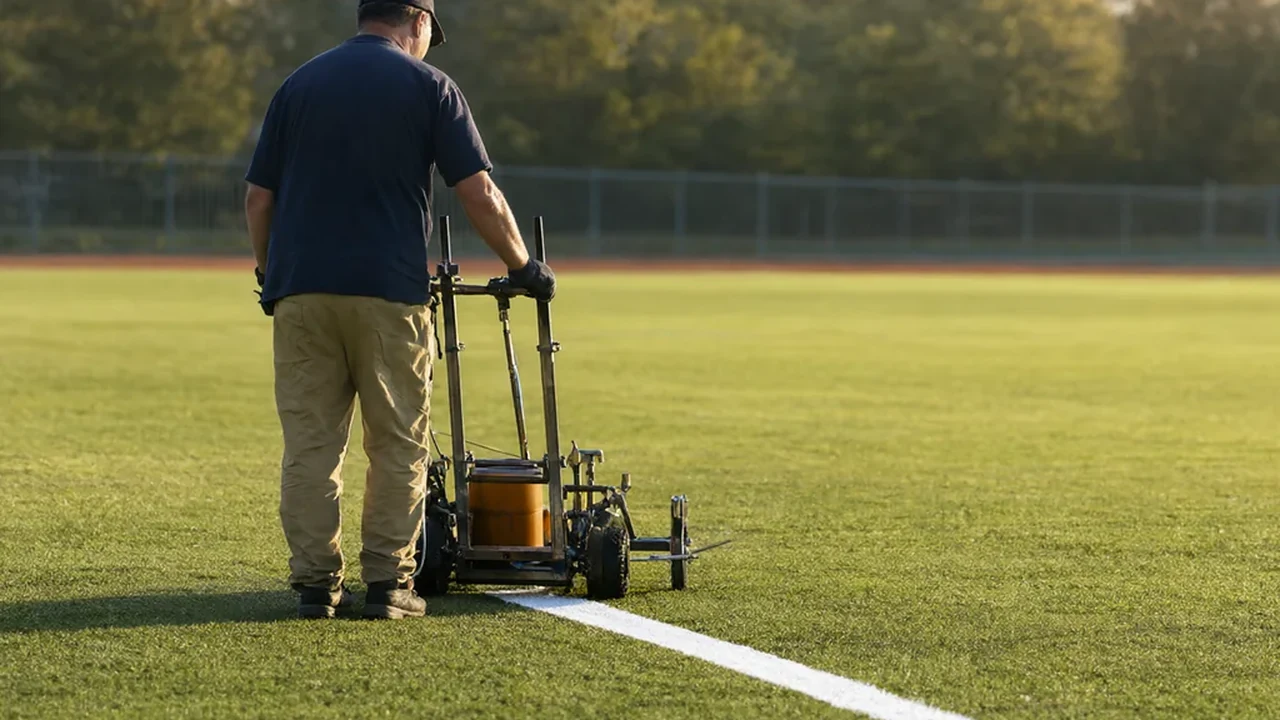
Every match starts with a rectangle. Law 1 sets its dimensions, its lines and the marks that decide penalties and goal kicks.
2026-10-18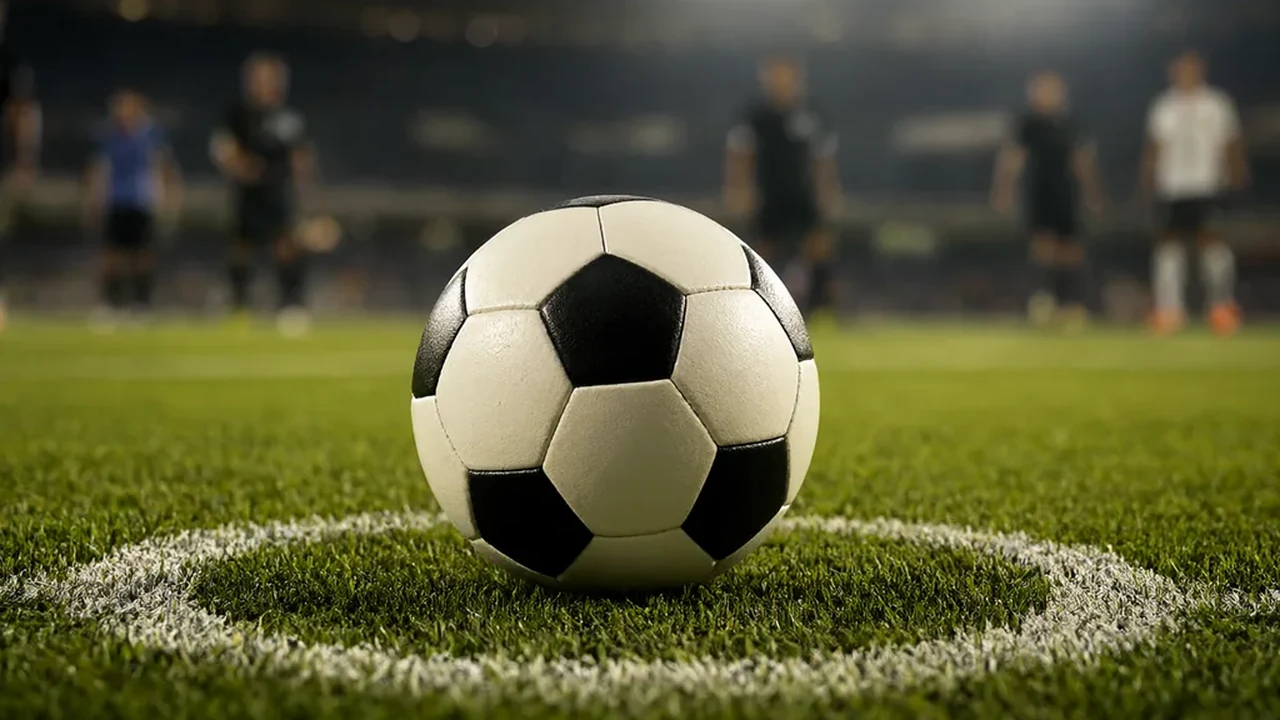
Law 2: The Ball, and What Makes It Legal
Circumference, weight, pressure and the dropped ball after a burst: Law 2 in the numbers the officials actually use.
2026-10-18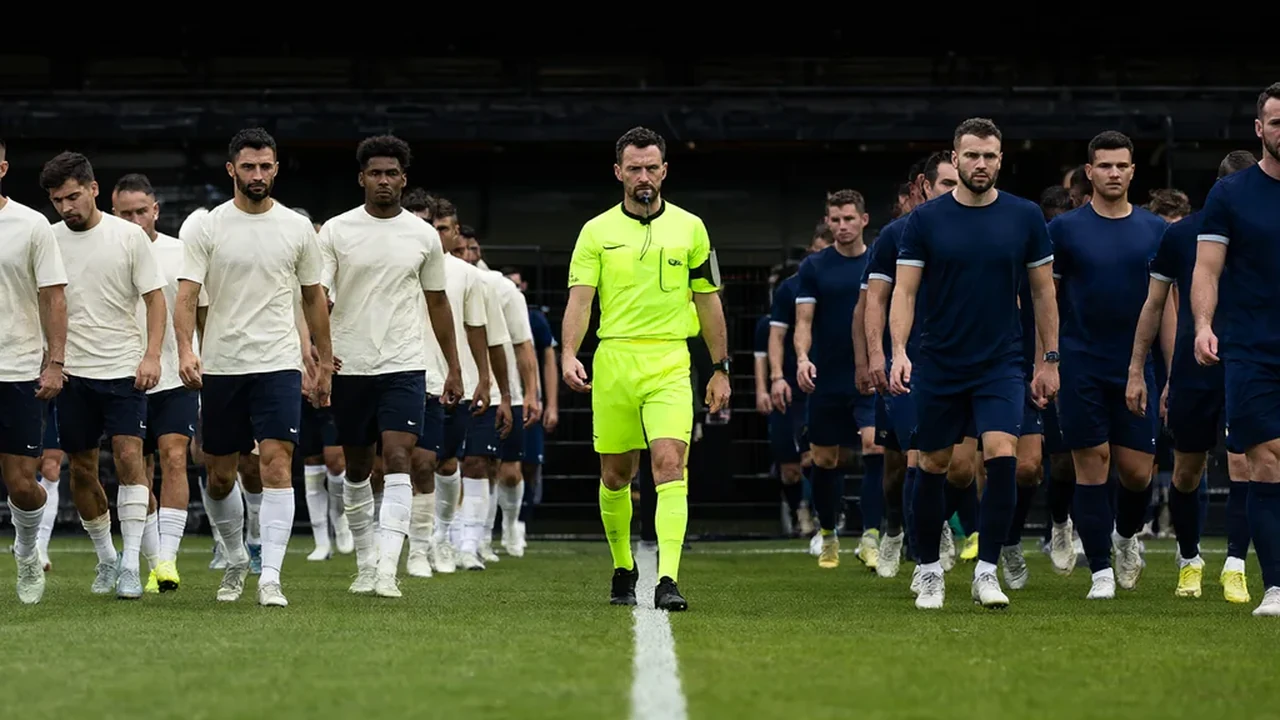
Law 3: How Many Players and How Many Subs
Eleven to start, seven to continue, five substitutions from three opportunities: the numbers and procedures in Law 3.
2026-10-18