Law 14 The Penalty Kick: Procedure, Goalkeeper and Retakes
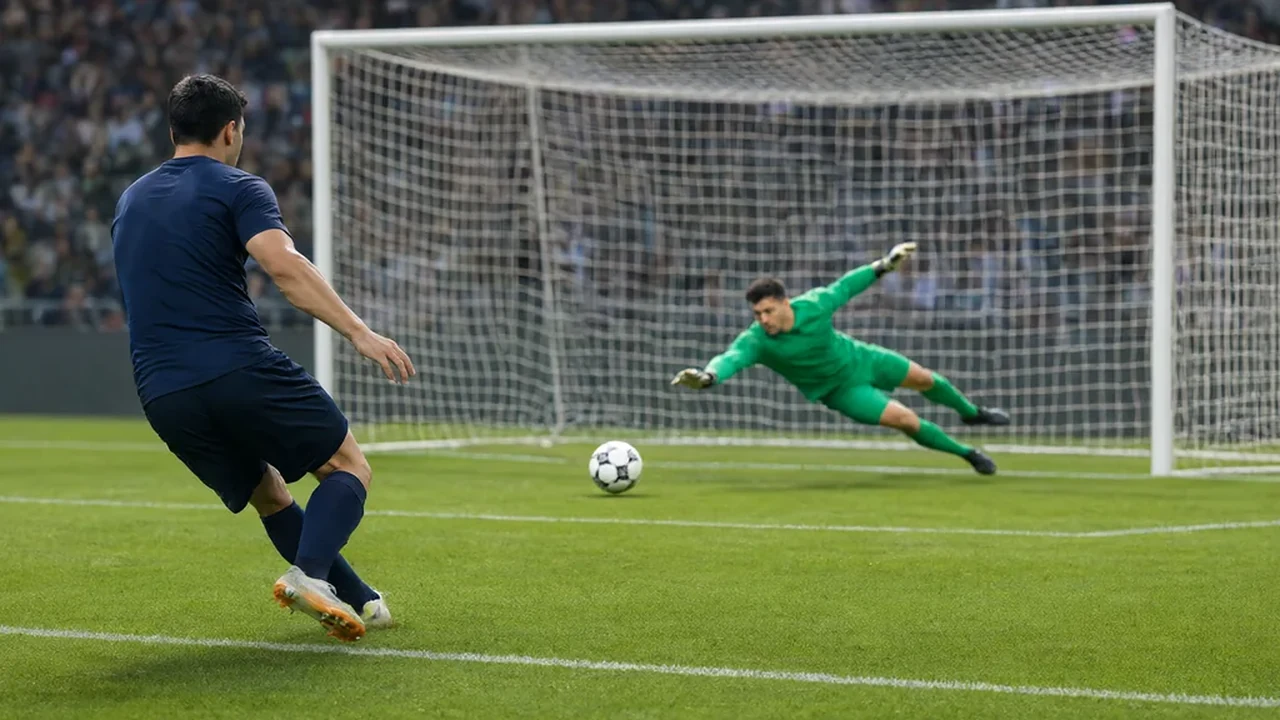
A penalty kick is the only restart in football where the law tells everyone in the stadium exactly where to stand. Law 14 is short, precise and unforgiving, and most of the controversies around it come from one of three places: a goalkeeper who leaves the line early, a player who enters the area too soon, or a kicker who tries to be clever after completing the run-up.
The kick is awarded when a player commits a direct free kick offence inside their own penalty area, or off the field of play as part of play as outlined in Laws 12 and 13. A goal may be scored directly from it. The ball goes on the penalty mark, 11 m (12 yds) from the midpoint between the goalposts, regardless of where inside the area the offence happened.
The procedure in order
The ball must be stationary, with part of it touching or overhanging the centre of the penalty mark, and the goalposts, crossbar and net must not be moving. The player taking the kick must be clearly identified to the referee. The defending goalkeeper must remain on the goal line, facing the kicker, between the goalposts until the ball is kicked, and must not behave in a way that unfairly distracts the kicker, which includes delaying the kick or touching the posts or net.
Every other player must be at least 9.15 m (10 yds) from the penalty mark, behind the penalty mark, inside the field of play and outside the penalty area. The arc outside the area exists for exactly this reason: it is drawn with a radius of 9.15 m from the centre of the penalty mark, so the referee and the assistant have a painted reference for a distance that is otherwise impossible to judge by eye. Once the players are in position, the referee signals for the kick.
What the kicker and the goalkeeper may do
The kicker must kick the ball forward, and a backheel is permitted provided the ball moves forward. The ball is in play when it is kicked and clearly moves. The kicker must not play the ball again until it has touched another player, and the kick itself is completed when the ball stops moving, goes out of play, or the referee stops play for an offence.
The goalkeeper's position is measured at the moment of the kick, not during the run-up. At that instant the goalkeeper must have at least part of one foot touching, in line with, or behind the goal line. Movement along the line is allowed, and so is coming off it, as long as some part of one foot is still on, level with, or behind the line when the ball is struck.
- The mark: 11 m (12 yds) from the midpoint between the goalposts.
- The arc: radius of 9.15 m (10 yds) from the centre of the penalty mark.
- The penalty area: 16.5 m (18 yds) from the inside of each goalpost.
- The other players: 9.15 m from the mark, behind it, inside the field, outside the area.
- The goalkeeper: part of one foot on, in line with, or behind the goal line at the moment of the kick.
Encroachment, and why it is now about impact
The current law does not punish every early entry. A team-mate of the kicker is penalised for encroachment only if the encroachment clearly impacted on the goalkeeper, or if the encroaching player plays the ball or challenges an opponent and then scores, attempts to score or creates a goal-scoring opportunity. The mirror rule applies to the defending team: a team-mate of the goalkeeper is penalised only if the encroachment clearly impacted on the kicker, or if the encroaching player plays the ball or challenges and prevents the opponents from scoring, attempting to score or creating an opportunity.
That wording is a deliberate retreat from the zero tolerance reading of the law, under which any toe inside the area produced a retake. The referee now has to answer a football question, not a geometry question: did the early entry actually change what happened?
Offences and the retake
Goalkeeper offences have their own ladder. If the goalkeeper offends and the ball enters the goal, the goal is awarded. If the ball is saved or otherwise prevented from entering, the kick is retaken. If the ball misses the goal or rebounds off the frame, the kick is retaken only when the goalkeeper's offence clearly impacted on the kicker. Where a retake is ordered, the goalkeeper is warned for the first offence in the game and cautioned for any subsequent one.
| Infringement before the ball is in play | If the ball enters the goal | If it does not |
|---|---|---|
| Attacking team-mate encroaches | Retake, when the encroachment is penalised | Indirect free kick, when the encroachment is penalised |
| Defending team-mate encroaches | Goal awarded | Retake |
| Goalkeeper leaves the line early | Goal awarded | Retake if saved, or if the offence clearly impacted on the kicker |
| Kick is played backwards | Indirect free kick | Indirect free kick |
| A team-mate takes the kick instead | Indirect free kick, taker cautioned | Indirect free kick, taker cautioned |
| Feinting after the run-up is complete | Indirect free kick, kicker cautioned | Indirect free kick, kicker cautioned |
| Accidental double touch by the kicker | Retake | Indirect free kick |
The feint, the double touch and the end of the half
Feinting during the run-up is permitted. Feinting to kick the ball once the run-up is complete is not: the referee cautions the kicker and restarts with an indirect free kick, whatever happens to the ball. The same restart follows a kick played backwards and a kick taken by a team-mate of the identified player, with the taker cautioned. The accidental double touch is treated more gently: where the kicker strikes the ball with both feet at once, or the ball touches the non-kicking foot or leg immediately after the kick, the kick is retaken if the ball enters the goal and an indirect free kick follows if it does not.
Additional time is allowed for a penalty kick to be taken and completed at the end of either half or at the end of extra time. Once that additional time has been allowed, the kick is complete when the ball stops moving, goes out of play, is played by anyone other than the defending goalkeeper, or the referee stops play for an offence by the kicker or the kicker's team. If a defending player including the goalkeeper commits an offence and the kick is missed or saved, it is retaken.
The offence that produces the kick in the first place is a direct free kick offence under Law 12, and the management of the resulting confrontation, including the cards, belongs to the referee's powers and duties. For the rest of the set piece laws, start from the laws section.
Read next
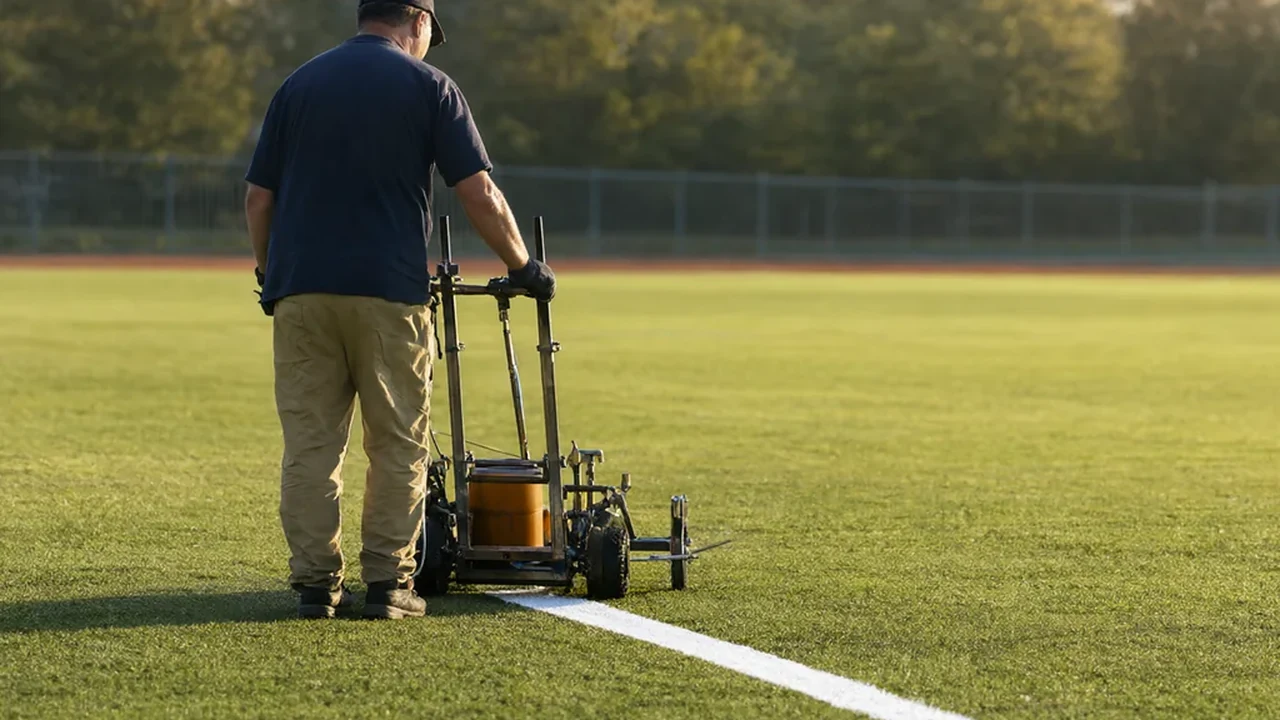
Law 1: The Field of Play, Measured
Every match starts with a rectangle. Law 1 sets its dimensions, its lines and the marks that decide penalties and goal kicks.
2026-10-18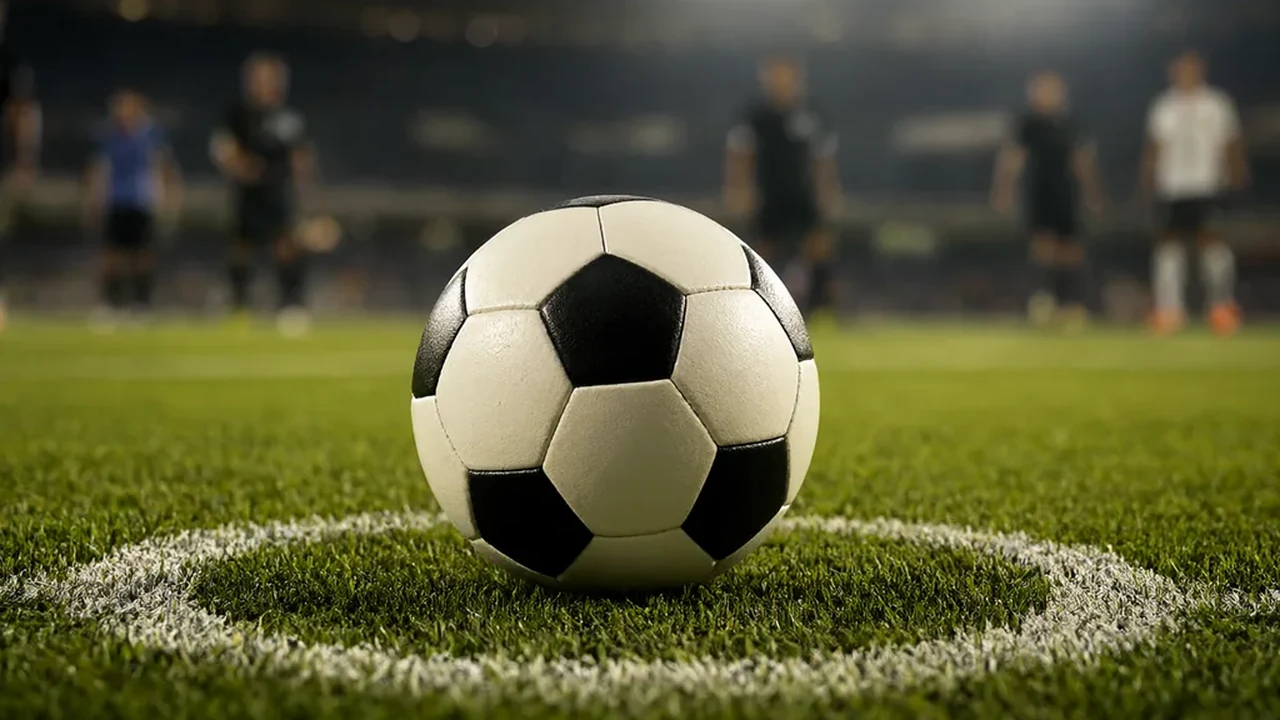
Law 2: The Ball, and What Makes It Legal
Circumference, weight, pressure and the dropped ball after a burst: Law 2 in the numbers the officials actually use.
2026-10-18
Law 3: How Many Players and How Many Subs
Eleven to start, seven to continue, five substitutions from three opportunities: the numbers and procedures in Law 3.
2026-10-18